


Alat Berat Blog
Semua Tentang Alat Berat
Proses Dasar Pengolahan Minyak Bumi

Kali ini kita akan bahas tentang proses dasar pengolahan minyak mentah hasil tambang sehingga menjadi produk akhir yang dapat dimanfaatkan bagi kehidupan kita sehari-hari. Tentunya proses ini sangat tidak sesederhana seperti pembahasan berikut, tapi setidaknya proses yang dilakukan sama secara prinsip dasarnya.
Minyak bumi biasanya berada 3-4 km di bawah permukaan laut. Minyak bumi diperoleh dengan membuat sumur bor. Baca artikel ‘Cara Pengeboran Minyak Bumi‘ untuk lebih jelas tentang proses awal terbentuknya minyak bumi dan proses penegeborannya. Minyak mentah yang diperoleh dari hasil pengeboran ditampung dalam kapal tanker atau dialirkan melalui pipa ke stasiun tangki atau ke kilang minyak.
Secara umum Proses Pengolahan Minyak Bumi digambarkan pada diagram berikut:

Minyak Mentah (Cude Oil)
Minyak mentah (cude oil) berbentuk cairan kental hitam dan berbau kurang sedap. Minyak mentah belum dapat digunakan sebagai bahan bakar maupun untuk keperluan lainnya, tetapi harus diolah terlebih dahulu. Minyak mentah mengandung sekitar 500 jenis hidrokarbon dengan jumlah atom C-1 sampai 50. Titik didih hidrokarbon meningkat seiring bertambahnya jumlah atom C yang berada di dalam molekulnya. Oleh karena itu, pengolahan minyak bumi dilakukan melalui destilasi bertingkat, dimana minyak mentah dipisahkan ke dalam kelompok-kelompok (fraksi) dengan titik didih yang mirip.
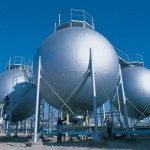
Penyimpanan
Tempat penyimpanan minyak mentah ini juga disebut Kilang Minyak (oil refinery) yaitu pabrik/fasilitas industri yang mengolah minyak mentah menjadi produk petroleum yang bisa langsung digunakan maupun produk-produk lain yang menjadi bahan baku bagi industri petrokimia.
Produk-produk utama yang dihasilkan dari kilang minyak antara lain: minyak bensin (gasoline), minyak disel, minyak tanah (kerosene). Kilang minyak merupakan fasilitas industri yang sangat kompleks dengan berbagai jenis peralatan proses dan fasilitas pendukungnya. Selain itu, pembangunannya juga membutuhkan biaya yang sangat besar.
Penghilangan Garam (Desalting)
Minyak mentah (crude oil), selain mengandung kotoran juga mengandung zat-zat mineral yang larut dalam air. Proses penghilangan kotoran disebut desalting atau penghilangan garam. Desalting dilakukan dengan cara mencampur minyak mentah dengan air sehingga mineral-mineral akan terlarut dalam air. Untuk meghilangkan senyawa-senyawa nonhidrokarbon, ke dalam minyak mentah ditambah dengan asam dan basa.
Proses desalting dilakukan untuk mencegah korosi pipa-pipa minyak dan mencegah tersumbatnya lubang-lubang di menara fraksinasi. Setelah minyak mentah mengalami proses desalting, selanjutnya minyak mentah dialirkan ke tangki pemanas untuk menguapkan minyak mentah dan kemudian uap minyak mentah dialirkan dalam menara fraksinasi (menara distilasi).
Destilasi Fraksinasi
Destilasi adalah pemisahan fraksi-fraksi minyak bumi berdasarkan perbedaan titik didihnya. Dalam hal ini adalah destilasi fraksinasi. Mula-mula minyak mentah dipanaskan dalam aliran pipa dalam tanur (furnace) sampai dengan suhu ± 370°C.
Minyak mentah yang sudah dipanaskan tersebut kemudian masuk kedalam kolom fraksinasi pada bagian flash chamber (biasanya berada pada sepertiga bagian bawah kolom fraksinasi). Untuk menjaga suhu dan tekanan dalam kolom maka dibantu pemanasan dengan steam (uap air panas dan bertekanan tinggi).
Minyak mentah yang menguap pada proses destilasi ini naik ke bagian atas kolom dan selanjutnya terkondensasi pada suhu yang berbeda-beda. Komponen yang titik didihnya lebih tinggi akan tetap berupa cairan dan turun ke bawah, sedangkan yang titik didihnya lebih rendah akan menguap dan naik ke bagian atas melalui sungkup-sungkup yang disebut sungkup gelembung.
Makin ke atas, suhu yang terdapat dalam kolom fraksionasi tersebut makin rendah, sehingga setiap kali komponen dengan titik didih lebih tinggi akan terpisah, sedangkan komponen yang titik didihnya lebih rendah naik ke bagian yang lebih atas lagi. Demikian selanjutnya sehingga komponen yang mencapai puncak adalah komponen yang pada suhu kamar berupa gas.
Komponen yang berupa gas ini disebut gas petroleum, kemudian dicairkan dan disebut LPG (Liquified Petroleum Gas). Fraksi minyak mentah yang tidak menguap menjadi residu. Residu minyak bumi meliputi parafin, lilin, dan aspal. Residu-residu ini memiliki rantai karbon sejumlah lebih dari 20.
Fraksi Berat Dan Ringan
Fraksi minyak bumi yang dihasilkan berdasarkan rentang titik didihnya antara lain sebagai berikut :

Fraksi-fraksi minyak bumi dari proses destilasi bertingkat belum memiliki kualitas yang sesuai dengan kebutuhan masyarakat, sehingga perlu pengolahan lebih lanjut yang meliputi proses cracking, reforming, polimerisasi, treating, dan blending.
Cracking
Cracking adalah penguraian molekul-molekul senyawa hidrokarbon yang besar menjadi molekul-molekul senyawa hidrokarbon yang kecil. Contoh cracking ini adalah pengolahan minyak solar atau minyak tanah menjadi bensin.
Proses ini terutama ditujukan untuk memperbaiki kualitas dan perolehan fraksi gasolin (bensin). Kualitas gasolin sangat ditentukan oleh sifat anti knock (ketukan) yang dinyatakan dalam bilangan oktan. Bilangan oktan 100 diberikan pada isooktan (2,2,4-trimetil pentana) yang mempunyai sifat anti knocking yang istimewa, dan bilangan oktan 0 diberikan pada n-heptana yang mempunyai sifat anti knock yang buruk.
Gasolin yang diuji akan dibandingkan dengan campuran isooktana dan n-heptana. Bilangan oktan dipengaruhi oleh beberapa struktur molekul hidrokarbon.
Terdapat 3 cara proses cracking, yaitu :
a. Cara panas (thermal cracking), yaitu dengan penggunaan suhu tinggi dan tekanan yang rendah. Contoh reaksi-reaksi pada proses cracking adalah sebagai berikut :

b. Cara katalis (catalytic cracking), yaitu dengan penggunaan katalis. Katalis yang digunakan biasanya SiO2 atau Al2O3 bauksit. Reaksi dari perengkahan katalitik melalui mekanisme perengkahan ion karbonium.
Mula-mula katalis karena bersifat asam menambahkna proton ke molekul olevin atau menarik ion hidrida dari alkana sehingga menyebabkan terbentuknya ion karbonium :

c. Hidrocracking
Hidrocracking merupakan kombinasi antara perengkahan dan hidrogenasi untuk menghasilkan senyawa yang jenuh. Reaksi tersebut dilakukan pada tekanan tinggi. Keuntungan lain dari Hidrocracking ini adalah bahwa belerang yang terkandung dalam minyak diubah menjadi hidrogen sulfida yang kemudian dipisahkan.
Reforming
Reforming adalah perubahan dari bentuk molekul bensin yang bermutu kurang baik (rantai karbon lurus) menjadi bensin yang bermutu lebih baik (rantai karbon bercabang). Kedua jenis bensin ini memiliki rumus molekul yang sama bentuk strukturnya yang berbeda. Oleh karena itu, proses ini juga disebut isomerisasi.
Reforming dilakukan dengan menggunakan katalis dan pemanasan. Contoh reforming adalah sebagai berikut :

Reforming juga dapat merupakan pengubahan struktur molekul dari hidrokarbon parafin menjadi senyawa aromatik dengan bilangan oktan tinggi. Pada proses ini digunakan katalis molibdenum oksida dalam Al2O3 atauplatina dalam lempung.Contoh reaksinya :

Alkilasi Dan Polimerisasi
Alkilasi merupakan penambahan jumlah atom dalam molekul menjadi molekul yang lebih panjang dan bercabang. Dalam proses ini menggunakan katalis asam kuat seperti H2SO4, HCl, AlCl3 (suatu asam kuat Lewis). Reaksi secara umum adalah sebagai berikut:
RH + CH2=CR’R’’ R-CH2-CHR’R”
Polimerisasi adalah proses penggabungan molekul-molekul kecil menjadi molekul besar. Reaksi umumnya adalah sebagai berikut :
M CnH2n Cm+nH2(m+n)
Contoh polimerisasi yaitu penggabungan senyawa isobutena dengan senyawa isobutana menghasilkan bensin berkualitas tinggi, yaitu isooktana.

Pemurnian (Treating)
Treating adalah pemurnian minyak bumi dengan cara menghilangkan pengotor-pengotornya. Cara-cara proses treating adalah sebagai berikut :
Copper sweetening dan doctor treating, yaitu proses penghilangan pengotor yang dapat menimbulkan bau yang tidak sedap.
Acid treatment, yaitu proses penghilangan lumpur dan perbaikan warna.
Dewaxing yaitu proses penghilangan wax (n parafin) dengan berat molekul tinggi dari fraksi minyak pelumas untuk menghasillkan minyak pelumas dengan pour point yang rendah.
Deasphalting yaitu penghilangan aspal dari fraksi yang digunakan untuk minyak pelumas
Desulfurizing (desulfurisasi), yaitu proses penghilangan unsur belerang.
Sulfur merupakan senyawa yang secara alami terkandung dalam minyak bumi atau gas, namun keberadaannya tidak dinginkan karena dapat menyebabkan berbagai masalah, termasuk di antaranya korosi pada peralatan proses, meracuni katalis dalam proses pengolahan, bau yang kurang sedap, atau produk samping pembakaran berupa gas buang yang beracun (sulfur dioksida, SO2) dan menimbulkan polusi udara serta hujan asam.
Berbagai upaya dilakukan untuk menyingkirkan senyawa sulfur dari minyak bumi, antara lain menggunakan proses oksidasi, adsorpsi selektif, ekstraksi, hydrotreating, dan lain-lain. Sulfur yang disingkirkan dari minyak bumi ini kemudian diambil kembali sebagai sulfur elemental.
Desulfurisasi merupakan proses yang digunakan untuk menyingkirkan senyawa sulfur dari minyak bumi. Pada dasarnya terdapat 2 cara desulfurisasi, yaitu dengan :
1. Ekstraksi menggunakan pelarut, serta
2. Dekomposisi senyawa sulfur (umumnya terkandung dalam minyak bumi dalam bentuk senyawa merkaptan, sulfida dan disulfida) secara katalitik dengan proses hidrogenasi selektif menjadi hidrogen sulfida (H2S) dan senyawa hidrokarbon asal dari senyawa belerang tersebut. Hidrogen sulfida yang dihasilkan dari dekomposisi senyawa sulfur tersebut kemudian dipisahkan dengan cara fraksinasi atau pencucian/pelucutan.
Akan tetapi selain 2 cara di atas, saat ini ada pula teknik desulfurisasi yang lain yaitu bio-desulfurisasi. Bio-desulfurisasi merupakan penyingkiran sulfur secara selektif dari minyak bumi dengan memanfaatkan metabolisme mikroorganisme, yaitu dengan mengubah hidrogen sulfida menjadi sulfur elementer yang dikatalis oleh enzim hasil metabolisme mikroorganisme sulfur jenis tertentu, tanpa mengubah senyawa hidrokarbon dalam aliran proses.
Reaksi yang terjadi adalah reaksi aerobik, dan dilakukan dalam kondisi lingkungan teraerasi. Keunggulan proses ini adalah dapat menyingkirkan senyawa sulfur yang sulit disingkirkan, misalnya alkylated dibenzothiophenes. Jenis mikroorganisme yang digunakan untuk proses bio-desulfurisasi umumnya berasal dari Rhodococcus sp, namun penelitian lebih lanjut juga dikembangkan untuk penggunaan mikroorganisme dari jenis lain.
Proses ini mulai dikembangkan dengan adanya kebutuhan untuk menyingkirkan kandungan sulfur dalam jumlah menengah pada aliran gas, yang terlalu sedikit jika disingkirkan menggunakan amine plant, dan terlalu banyak untuk disingkirkan menggunakan scavenger. Selain untuk gas alam dan hidrokarbon, bio-desulfurisasi juga digunakan untuk menyingkirkan sulfur dari batubara.
Proses Shell-Paques Untuk Bio-Desulfurisasi Aliran Gas
Salah satu lisensi proses bio-desulfurisasi untuk aliran gas adalah Shell Paques dari Shell Global Solutions International dan Paques Bio-Systems. Proses ini sudah diterapkan secara komersial sejak tahun 1993, dan saat ini kurang lebih terdapat sekitar 35 unit bio-desulfurisasi dengan lisensi Shell-Paques beroperasi di seluruh dunia.
Proses ini dapat menyingkirkan sulfur dari aliran gas dan menghasilkan hidrogen sulfida dengan kapasitas mulai dari 100 kg/hari sampai dengan 50 ton/hari, menggunakan mikroorganisme Thiobacillus yang sekaligus bertindak sebagai katalis proses bio-desulfurisasi. Dalam proses ini, aliran gas yang mengandung hidrogen sulfida dilewatkan pada absorber dan dikontakkan pada larutan soda yang mengandung mikroorganisme.
Senyawa soda mengabsorbi hidrogen sulfida, dan kemudian dialirkan ke bioreaktor THIOPAQ berupa tangki atmosferik teraerasi dimana mikroorganisme mengubah hidrogen sulfida menjadi sulfur elementer secara biologis dalam kondisi pH 8,2-9. Sulfur hasil reaksi kemudian melalui proses dekantasi untuk memisahkan dengan cairan soda.
Cairan soda dikembalikan ke absorber, sedangkan sulfur diperoleh sebagai cake atau sebagai sulfur cair murni. Karena sifatnya yang hidrofilik sehingga mudah diabsorpsi oleh tanah, maka sulfur yang dihasilkan dari proses ini dapat juga dimanfaatkan sebagai bahan baku pupuk.
Keunggulan dari proses Shell-Paques adalah :
Dapat menyingkirkan sulfur dalam jumlah besar (efisiensi penyingkiran hidrogen sulfida dapat mencapai 99,8%) hingga menyisakan kandungan hidrogen sulfida yang sangat rendah dalam aliran gas (kurang dari 4 ppm-volume).
Pemurnian gas dan pengambilan kembali (recovery) sulfur terintegrasi dalam 1 proses- gas buang (flash gas/vent gas) dari proses ini tidak mengandung gas berbahaya, sehingga sebelum dilepas ke lingkungan tidak perlu dibakar di flare. Hal ini membuat proses ini ideal untuk lokasi-lokasi dimana proses yang memerlukan pembakaran (misalnya flare atau incinerator) tidak dimungkinkan.
Menghilangkan potensi bahaya dari penanganan solvent yang biasa digunakan untuk melarutkan hidrogen sulfida dalam proses ekstraksi sifat sulfur biologis yang hidrofilik menghilangkan resiko penyumbatan (plugging atau blocking) pada pipa Bio-katalis yang digunakan bersifat self-sustaining dan mampu beradaptasi pada berbagai kondisi proses.
Konfigurasi proses yang sederhana, handal dan aman (antara lain beroperasi pada suhu dan tekanan rendah) sehingga mudah untuk dioperasikan Proses Shell-Paques ini dapat diterapkan pada gas alam, gas buang regenerator amine, fuel gas, synthesis gas, serta aliran oksigen yang mengandung gas limbah yang tidak dapat diproses dengan pelarut.
Pencampuran (Blending)
Proses blending adalah penambahan bahan-bahan aditif kedalam fraksi minyak bumi dalam rangka untuk meningkatkan kualitas produk tersebut. Bensin yang memiliki berbagai persyaratan kualitas merupakan contoh hasil minyak bumi yang paling banyak digunakan di barbagai negara dengan berbagai variasi cuaca.
Untuk memenuhi kualitas bensin yang baik, terdapat sekitar 22 bahan pencampur yang dapat ditambanhkan pada proses pengolahannya.
Diantara bahan-bahan pencampur yang terkenal adalah tetra ethyl lead (TEL). TEL berfungsi menaikkan bilangan oktan bensin. Demikian pula halnya dengan pelumas, agar diperoleh kualitas yang baik maka pada proses pengolahan diperlukan penambahan zat aditif. Penambahan TEL dapat meningkatkan bilangan oktan, tetapi dapat menimbulkan pencemaran udara.
Sumber : Berbagai Sumber
Berita Terkait Lainnya Tentang Proses Dasar Pengolahan Minyak Bumi


Komentar

Translate »
